Case Study — Litigation
Hot Shock SEM Case Study
- Birmingham, AL
- 2019
- Litigation Consulting
Overview
Vista Engineering was engaged as a forensic engineering consultant in a litigation matter involving a vehicle accident. A critical question in the case was whether the vehicle’s headlights were illuminated at the time of the crash. Vista’s engineers utilized Scanning Electron Microscopy (SEM) to examine the tungsten filament from the headlight bulb to answer this question definitively.
The Hot Shock Method
The “hot shock” method is a well-established forensic technique used to determine the operational state of incandescent bulbs at the time of a traumatic event. When a lamp filament is operating (hot) at the time of impact, it behaves differently from a cold, non-operating filament.
A hot filament is more ductile and susceptible to deformation and stretching under shock loads, while a cold filament tends to fracture cleanly. Additionally, when a hot bulb envelope is broken, melted glass particles can fuse onto the hot filament — evidence that can be detected under high-magnification SEM imaging.
SEM Examination
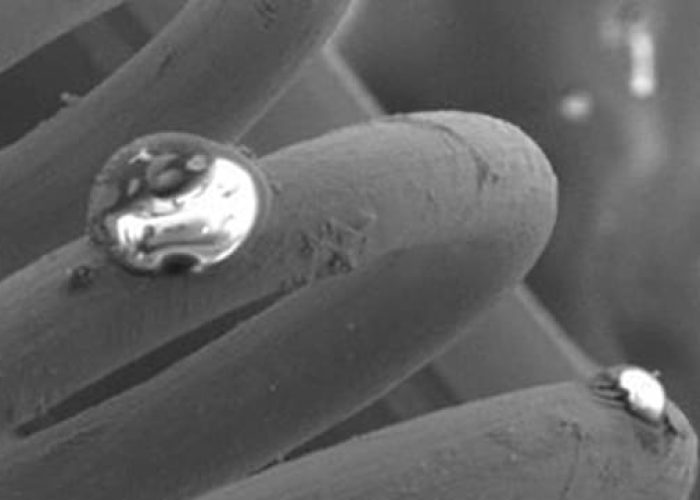
Our laboratory conducted high-magnification Scanning Electron Microscope (SEM) examination of the recovered tungsten filament from the vehicle’s headlight. The SEM provided detailed surface imagery at the microscopic level, far beyond what is achievable with optical microscopy.
The examination focused on identifying the presence or absence of melted glass deposits on the filament surface, as well as analyzing the filament’s deformation characteristics and fracture morphology.
Findings
- SEM imaging revealed melted glass particles fused to the surface of the tungsten filament.
- The presence of melted glass on the filament is only possible when the filament is at operating temperature at the time the bulb envelope is broken.
- Filament deformation was consistent with a hot-shock event, showing ductile stretching rather than brittle fracture.
- The combined evidence confirmed that the headlights were ON at the time of the collision.
Conclusion
Vista Engineering’s SEM analysis provided objective, scientifically defensible evidence that the vehicle’s headlights were illuminated at the moment of impact. This finding was crucial to the litigation outcome and demonstrates the value of advanced laboratory analysis in forensic engineering investigations..
Case Details
Need Forensic SEM Analysis?
Our ISO 17025 accredited laboratory provides advanced SEM analysis for litigation and forensic engineering matters.